
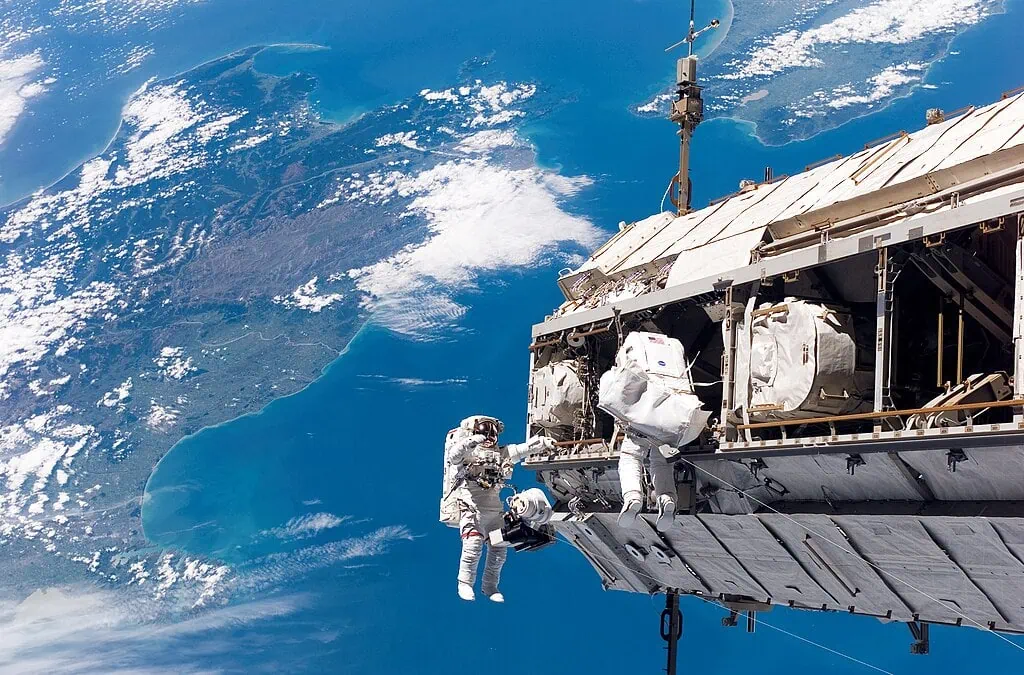
TL;DR: The sensational 2019 allegation that a NASA astronaut committed the first crime in space did not hold up. Summer Heather Worden has now pleaded guilty to lying to federal investigators about the claim that an astronaut “hacked a bank account from orbit;” sentencing is set for February 12, 2026.
Astronaut Anne McClain, Worden’s then-estranged spouse, was cleared years ago.
The Allegation (2019)
In August 2019, while McClain was fresh off a six-month stint aboard the International Space Station. Originally pinned as a potential cybercrime; it was really just a relationship unraveling at high altitude. McClain and Worden had married, then split. In the middle of that separation and a custody fight, Worden told authorities and the press that McClain had illegally accessed her bank account from space. It had every ingredient for going viral: a high-profile astronaut, a messy breakup, and the brand-new phrase “First Crime in Space!” McClain never denied logging in. She said she’d long had permission and was tracking household bills during the couple’s breakup, while she orbited Earth. The tabloid-ready media did the rest.
What Investigators Found
A joint probe by NASA’s Office of Inspector General and the Federal Trade Commission pulled logs, dates, and prior permissions. Their conclusion was that Worden had shared access with McClain for years; both had access until January 2019. This undercut the claim that McClain “broke in” from orbit. In April 2020, federal prosecutors charged Worden with making false statements to the FTC and NASA-OIG about those facts and dates. This shifted the, legal, spotlight from the astronaut to her accuser.
The Plea (2025)
On Nov. 13, 2025, Worden pleaded guilty to one count of lying to law enforcement. She remains free on bond until her sentencing in Feb. 2026. Multiple outlets note prosecutors later agreed to dismiss other counts in a superseding indictment as part of the plea, with restitution expected.
Bottom line: the “first crime in space” fizzled out quickly in court; but the false-statements case sure didn’t.
Why U.S. Courts Handled It
Even though it happened in space, jurisdiction on the ISS follows the 1998 Intergovernmental Agreement that says each individual partner nation has criminal jurisdiction over its nationals and the pieces of the station they register. In this case, both the astronaut and the accuser are U.S. nationals, so the case was heard in federal court in Houston.
(The IGA does also has rules for cross-border incidents that endanger another partner’s nationals or modules, but those rules didn’t apply here.)
Why This Story Blew Up (and What it Teaches)
-
It Had the Perfect Hook: An astronaut spouse. A separation. A custody dispute. The story had ‘reality-tv-level drama,’ so the “first crime in space” headline took off way faster than the dry facts about shared passwords and bill-pay routines. Then it lived on in memes on social media, even after McClain was cleared.
-
A Test Case for Real “Space Law”: This was a pop-culture crash-course in how crimes in orbit are handled on Earth. The ISS already has a functioning legal framework, but the next decade brings private crews, tourists, and mixed-nationality teams. Expect more questions about who investigates what, where, and under which nation’s rules.
-
Receipts > Rumors: In the end, access logs, proven prior consent, and date-stamped records decided the case quickly.
Timeline at a Glance
- Dec. 2018-Jun. 2019: McClain serves on ISS. Alleged account access sits within a long-standing shared-access period.
-
Aug. 2019: Allegation hits the press; media reports on it during McClain’s ISS mission; NASA-OIG looks into it.
-
Apr. 2020: DOJ announces charges against Worden for false statements to NASA-OIG and the FTC investigators.
-
Nov. 2025: Worden pleads guilty; sentencing slated for Feb. 2026.
Why It’s Not Over Yet
Space law won’t be the wild west just because the setting is Low-Earth-Orbit. On the ISS, nationality and module ownership decide jurisdiction; partners will only consult if another country’s people or hardware are harmed. And as more players go up: SpaceX, Axiom, national labs, tourists, etc. Expect less clear-cut cases like this one and more ‘gray-area’ jurisdiction and more nuanced decisions about which nation’s rules apply; but at least the ISS playbook gives everyone a good place to start.
-
Myth vs. Reality: This was the first alleged, not actual, “crime in space.” The plea deal confirms the investigators’ earlier findings.
-
Space Law in Practice: The case became a real-world test of how ISS jurisdiction works today, and a preview of the upcoming complexities as private, multinational crews grow.
-
Media Literacy: A sensational headline traveled faster than the eventual facts; DOJ records and court actions brought the resolution years later.
Sources
-
DOJ (S.D. Texas): 2020 charging release; elements of the 2025 plea and penalties echoed in national coverage. Department of Justice
-
CBS News: Plea entered, sentencing date and max penalty. CBS News
-
Houston Chronicle: Local case details include superseding indictment context/restoration. Houston Chronicle
-
The Guardian (2019): First wave coverage of the allegation/denial during the ISS mission. The Guardian
-
CRS & NASA on ISS jurisdiction: Article 22, IGA. Congress.gov