
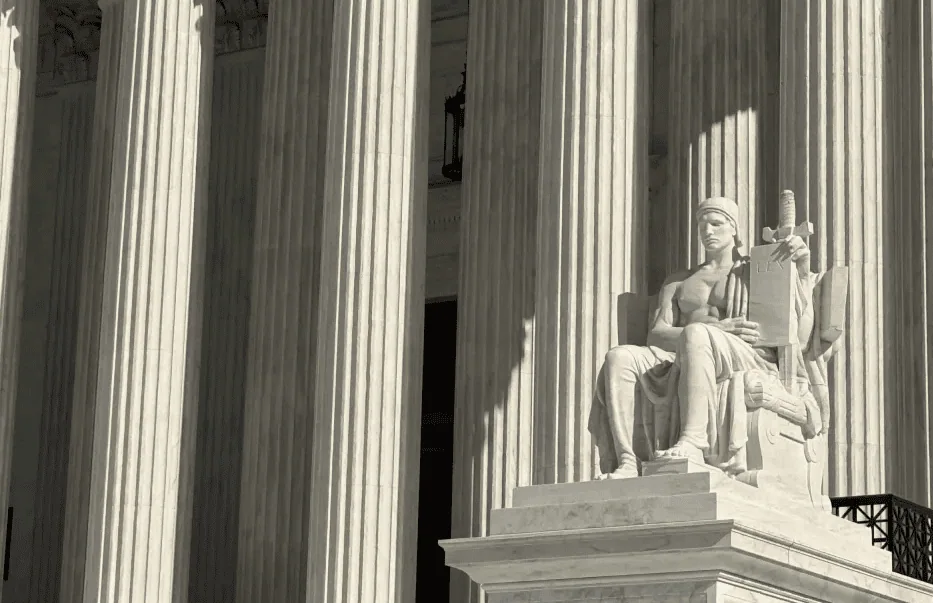
The U.S. Supreme Court is gearing up for its October and November term. Starting October 6, 2025 the Court will consider a host of cases with potentially sweeping consequences… From Sixth Amendment rights to free speech, elections, and more. Here’s a comprehensive look at the docket, what’s at stake, and why you should care:
Supreme Court’s October Arguments
Mon, Oct 6
Villarreal v. Texas (24-557)
Issue: Whether police violating a defendant’s right to consult counsel during an overnight recess is a structural Sixth Amendment error, and if the same logic applies to a weekend recess.
Why it matters: The case may clarify the limits of recess-time attorney-client consultation access during pivotal trial moments, even decades after Geders v. U.S. provided the framework for similar disputes. It could reshape trial procedures nationwide.
Berk v. Choy (24-440)
Issue: Can federal courts apply state laws that require expert-affidavit-backed lawsuits in federal court to a federal claim?
Why it matters: A ruling will affect how evidence-heavy claims (medical, technical, etc.) are handled in federal court, potentially raising dismissal thresholds and impacting access to justice for complex cases.
Tue, Oct 7
Chiles v. Salazar (24-539)
Issue: Does banning conversion therapy for minors by mental health professionals violate free speech?
Why it matters: This case tests whether state regulation of therapeutic content infringes on First Amendment protections, impacting how states regulate clinician speech and religiously motivated counseling.
Barrett v. United States (24-5774)
Issue: Whether §924(c) and §924(j) are distinctly different offenses permitting separate punishments (or must they merge).
Why it matters: A decision could reduce stacked sentences in federal gun prosecutions and reshape charging strategies.
Wed, Oct 8
Bost v. Illinois State Board of Elections (24-568)
Issue: Do federal candidates have legal Article III standing to challenge state election regulations around time, place, and manner? (Counting timely postmarked mail ballots received within 14 days)
Why it matters: The ruling could affect the ability of candidates to bring federal challenges to state election law structures, potentially central to future election litigation.
United States Postal Service v. Konan (24-351)
Issue: Does intentional failure to deliver mail fall under the FTCA exclusion of “loss” or “miscarriage” of postal matter? Can claims proceed when plaintiffs allege intentional non-delivery?
Why it matters: A decision could expand or restrict liability for postal negligence, shaping the scope of victims’ redress options against USPS.
Tue, Oct 14
Bowe v. United States (24-5438)
Issue: Interaction between §2244 and §2255 limits on second/successive post-conviction motions; SCOTUS jurisdiction over gatekeeping orders.
Why it matters: This issue concerns the fairness and finality of legal challenges brought by prisoners. It’s a fundamental question of due process and judicial efficiency.
Ellingburg v. United States (24-482)
Issue: Is the Mandatory Victim Restitution Act (MVRA) restitution a criminal punishment for ex post facto purposes? (Court appointed amicus; DOJ sought divided argument.)
Why it matters: Depending on the ruling, we could see a reset to restitution rules and retroactivity.
Wed, Oct 15
Louisiana v. Callais (24-109) (reargument; consolidated with Robinson v. Callais (24-110))
Issue: Redistricting dispute over Louisiana’s map and the legality of crafting an additional majority-Black district. Is Louisiana’s map racially gerrymandered, and does it violate the Fourteenth/Fifteenth Amendments?
Why it matters: Second-round arguments could influence how future redistricting disputes are adjudicated and affect voting rights standards.
Case v. Montana (24-624)
Issue: Can law enforcement enter a home without a warrant during a suspected “emergency,” on less than probable cause?
Why it matters: It reexamines the balance between privacy rights and emergency policing, threatening to redefine permissible warrantless searches. It will clarify Fourth Amendment thresholds for home entry.
Supreme Court’s November Arguments
Mon, Nov 3
Rico v. United States (24-1056)
Issue: Does a defendant on supervised release gain additional time if they’re considered a fugitive?
Why it matters: The ruling could clarify supervised release violations across federal districts and affect parole outcomes.
Hencely v. Fluor (24-924)
Issue: Whether Boyle extends to let FTCA combatant-activities interests preempt state tort claims against contractors. Can a service member injured in a terrorist attack sue the corporate contractor who employed the attacker?
Why it matters: It confronts defense contractor accountability and the limits of liability in military-related incidents.
Tue, Nov 4
Hamm v. Smith (24-872) – capital case.
Issue: How courts should treat multiple IQ scores in defendants with intellectual disabilities, should they be exempt from execution, and how are such claims assessed?
Why it matters: This case could impact death penalty precedent, evidentiary standards in capital cases nationwide, and how courts evaluate intellectual disability claims.
The Hain Celestial Group, Inc. v. Palmquist (24-724)
Issue: Must a final judgment be vacated when an appellate court later finds a non-diverse party was wrongly dismissed at removal?
Why it matters: The outcome will clarify procedural fairness, diversity jurisdiction, finality, and do-over trials in jurisdictional transitions between courts.
Wed, Nov 5
Coney Island Auto Parts, Inc. v. Burton (24-808)
Issue: Does Federal Rule of Civil Procedure 60(c)(1) impose any time limit to set aside a void default judgment for lack of personal jurisdiction?
Why it matters: The decision could clarify whether challenges to void judgments have a strict time limit, affecting how long defendants can contest court rulings based on jurisdictional errors.
Mon, Nov 10
Landor v. Louisiana Department of Corrections (23-1197)
Issue: Can an inmate sue individual officials for damages under RLUIPA for violations of religious rights in custody, instead of the state agency?
Why it matters: It could broaden avenues for incarcerated people to claim damages under religious rights protections.
The GEO Group, Inc. v. Menocal (24-758)
Issue: Whether an order denying a government contractor’s claim of derivative sovereign immunity is immediately appealable under the collateral-order doctrine.
Why it matters: A ruling could give government contractors, like private prison operators, a faster path to appeal immunity claims, potentially avoiding lengthy litigation.
Wed, Nov 12
(3) 24-556 Fernandez v. United States
(4) 24-820 Rutherford & 24-860 Carter v. United States (consolidated; 1 hr)
Issue: When may reasons supporting §2255 relief also count as “extraordinary and compelling” under §3582(c)(1)(A)? Can those reasons justify a sentence reduction post-First Step Act?
Why it matters: The ruling will affect inmates’ ability to receive leniency under changing sentencing laws, and affect nationwide guidance for compassionate-release motions.
Granted (Not Yet Scheduled High-Profile Cases)
In addition to these scheduled cases, the Court accepted other notable disputes, including:
-
NRSC v. FEC (24-621): First Amendment challenge to coordinated party-expenditure caps.
-
Cox Communications v. Sony Music (24-171): Standards for ISP secondary liability and willfulness in copyright.
-
FS Credit Opportunities v. Saba Capital (24-345): Whether ICA §47(b) implies a private right of action.
-
Enbridge Energy v. Nessel (24-783): Can courts equitably excuse the 30-day removal deadline?
-
First Choice Women’s Resource Centers v. Platkin (24-781): Whether groups facing investigatory subpoenas chilling donor/speech rights can sue promptly in federal court (and must federal court yield to parallel state proceedings?).
-
Urias-Orellana v. Bondi (24-777): Standard of review for BIA determinations that facts don’t amount to “persecution.”
-
Olivier v. City of Brandon (24-993): Whether Heck v. Humphrey bars §1983 suits seeking prospective relief after past punishment under the challenged law.
- Chevron U.S.A. v. Plaquemines Parish (24-813): Federal-officer removal, can WWII-era federal contracts support removal of Louisiana coastal damage suits?
Special sitting to watch
IEEPA Tariff Challenges: (fast-tracked; November date TBA)
Learning Resources v. Trump (24-1287) & Trump v. V.O.S. Selections (25-250) (consolidated, first week of November (per the Court’s grant/expedite order)): These consolidated cases challenge the legality of broad tariffs imposed under emergency powers. Expect a special setting the Court flagged for November.
From the Courtroom to Our Communities
The Supreme Court’s fall lineup is unusually packed, covering just about every corner of American life. Some cases hit close to home, like whether a counselor can talk openly with clients about identity, how far police can go into someone’s home without a warrant, or if a prisoner can personally sue an official for violating their religious rights. Others are more about the big picture, redrawing political maps, deciding who controls the speed of federal lawsuits, or figuring out when a government contractor can dodge a trial.
These aren’t just random legal squabbles. They’re turning points that could shift policy, politics, and precedent… all at once. One decision might change how federal courts handle sentencing, redraw the lines of free speech in healthcare, overhaul election rules, or change the balance of power between states and Washington. Even the “boring” stuff could quietly shape decades of legal strategy, influencing far more cases than the ones directly in front of the justices.
However the rulings go, they’ll for sure make a lasting impact. Guiding how states write new laws, telling lower courts where the constitutional lines are, and directly affecting how people in the justice system experience it. You can review the official Supreme Court oral argument calendar for the full schedule and more details. For more news and career advice visit Diversity Employment.