
Legal advice basics aren’t all that common to come by… The legal system usually feels like a game where everyone else has the rulebook at birth… And you’re just trying not to foul out. If you aged out of a system, grew up in a house where the law was only something that happened to people, or simply never had a mentor explain how a contract works, you aren’t “behind.” You just haven’t been handed the manual… yet.
The Manual You Never Got
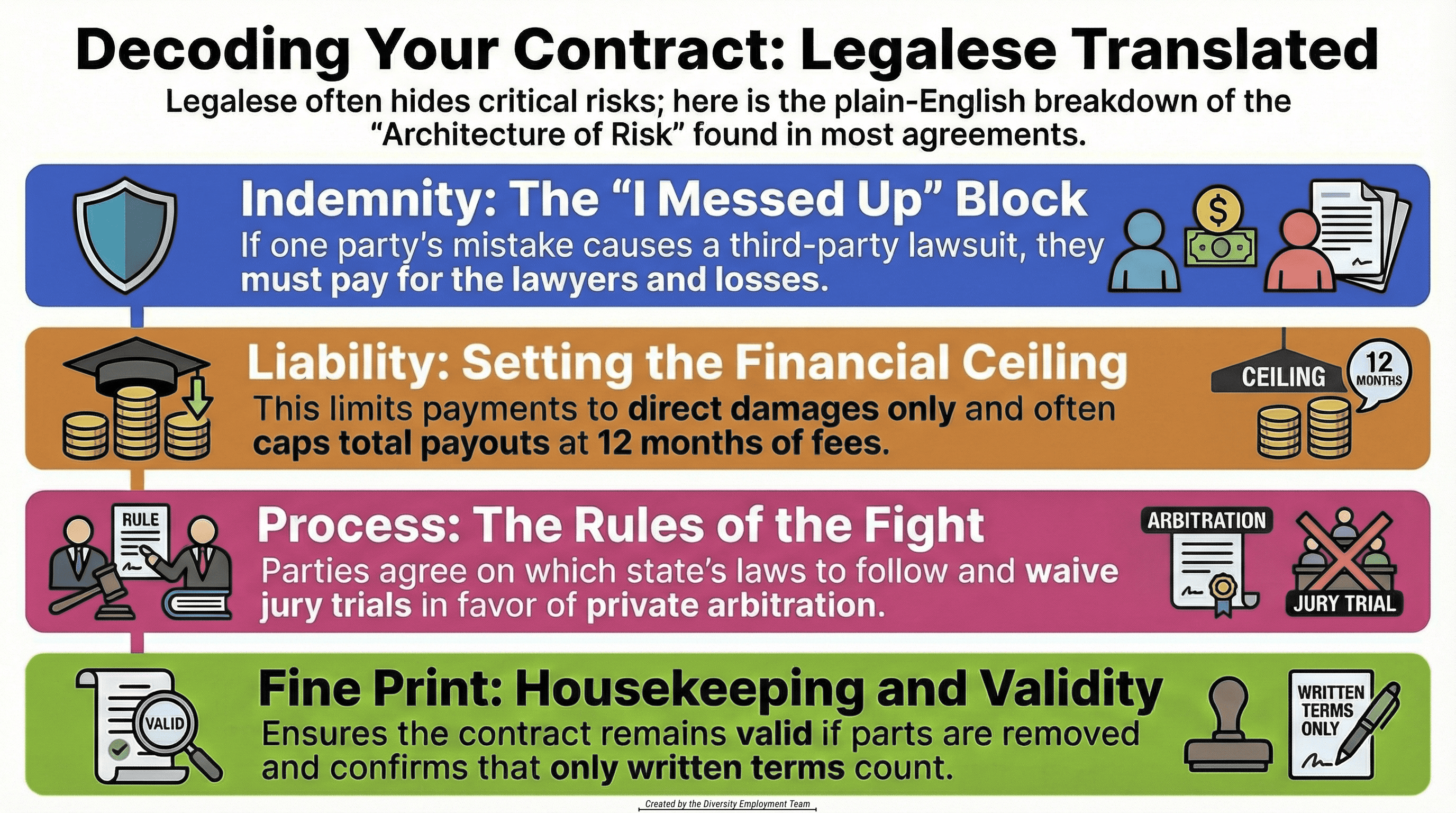
Legal documents are intentionally worded to be intimidating and downright confusing. They uses “legalese” to hide simple, but sometimes predatory, concepts. All in the hopes that you’ll just blindly sign the paper and move on because they stress you out.
This isn’t about passing the Bar exam or memorizing Latin phrases. It’s about building a translation layer. We are stripping away the corporate fluff to give you the basics of legal advice life skills needed to protect your bank account, your housing, and your sanity. We’re turning legal fear into a survival skill.
The Personal “Paperwork Shield”
Your first lease isn’t a permission slip to live somewhere; it’s a binding contract that dictates your quality of life. Landlords are increasingly using “boilerplate” digital leases that contain aggressive clauses that most people unfortunately skip.
The Lease: Your First Real Test
Don’t just “read the fine print,” look for these three specifics.
- Check the Rent Increase Cap. If the lease doesn’t explicitly state how much or how often rent can go up… you’re at risk of it happening.
- Look for the Guest Policy. Some predatory leases define a “guest” as anyone staying more than two nights. They can lead to eviction threats if a friend or family member crashes on your couch.
- Verify the Maintenance Responsibility. In many states, the landlord is legally required to keep the unit “habitable” (heat, water, no mold), but they might try to bury clauses that make you responsible for professional repairs. If the sink breaks because the pipes are 50 years old, that’s their bill, not yours.
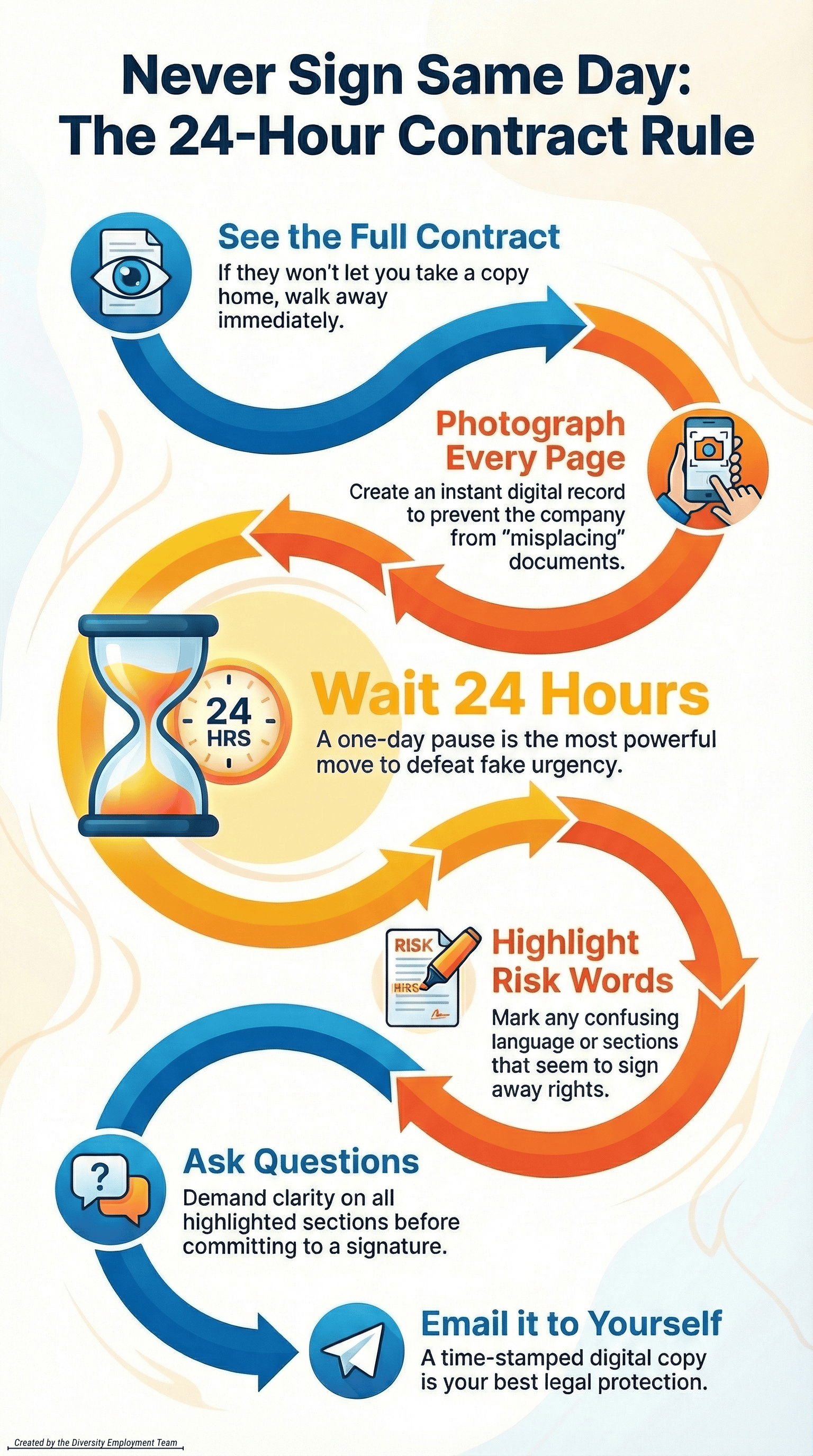
Never sign a lease on the same day you see it. Take it home, or at least take a photo of every page, and tell them you’ll sign in 24 hours. If they pressure you with “someone else is waiting,” that is usually a red flag that they don’t want you to read the fine print.
The “In Case of Emergency” Files
If you don’t have a family safety net, you need a legal safety net. This consists of two documents that speak for you when you can’t. A Durable Power of Attorney (DPOA) allows someone you trust: a partner, a close friend, or a mentor to handle your bank accounts and bills if you end up in the hospital. Without this, your rent could go unpaid and your car could be repossessed while you’re literally unable to stop it. It sounds heavy, but it’s just basic administrative protection.
The second is an Advance Healthcare Directive. This legally binding document tells doctors what kind of treatment you want (or don’t want) if you are unresponsive for any reason. It prevents a stranger, like a court-appointed guardian, from making life-altering medical decisions for you. Best part is, most of the time you don’t need a lawyer for these. Most states have statutory forms you can download for free, fill out, and notarize at a local bank or library for just a few dollars.
The 24-Hour Rule
The single most powerful move you have is the pause. Whether you’re applying for a car loan or even just a gym membership, most salespeople use fake urgency to trick you out of common sense. If a document is more than two pages long, it probably deserves the 24-hour review period.
If a business doesn’t let you take a copy of the contract home before signing it, bet to just walk away. There’s no “deal of a lifetime” that justifies signing away any of your legal rights under pressure. Simple legal advice basics: always keep a physical or digital copy of signed documents in a folder, a secure cloud folder, or email it to yourself. A time-stamped email is much harder for a company to misplace than a piece of paper.
Legal Aid for The Rest of Us
If you’re not flush, the idea of hiring a lawyer sounds about as realistic as buying a private island. But the system actually has a sort of poverty-safety-net built in specifically for civil issues like evictions, debt collection, or domestic safety.
The “I Have Zero Dollars” Strategy
Earlier this year, the federal government secured $540 million in funding for the Legal Services Corporation (LSC). The money is given to over 130 non-profit legal-aid organizations all across the country. They aren’t entry-level public defenders (no shade intended) or “discount” lawyers; they are actually specialists that handle the exact kind of “life basics” problems we’re talking about.
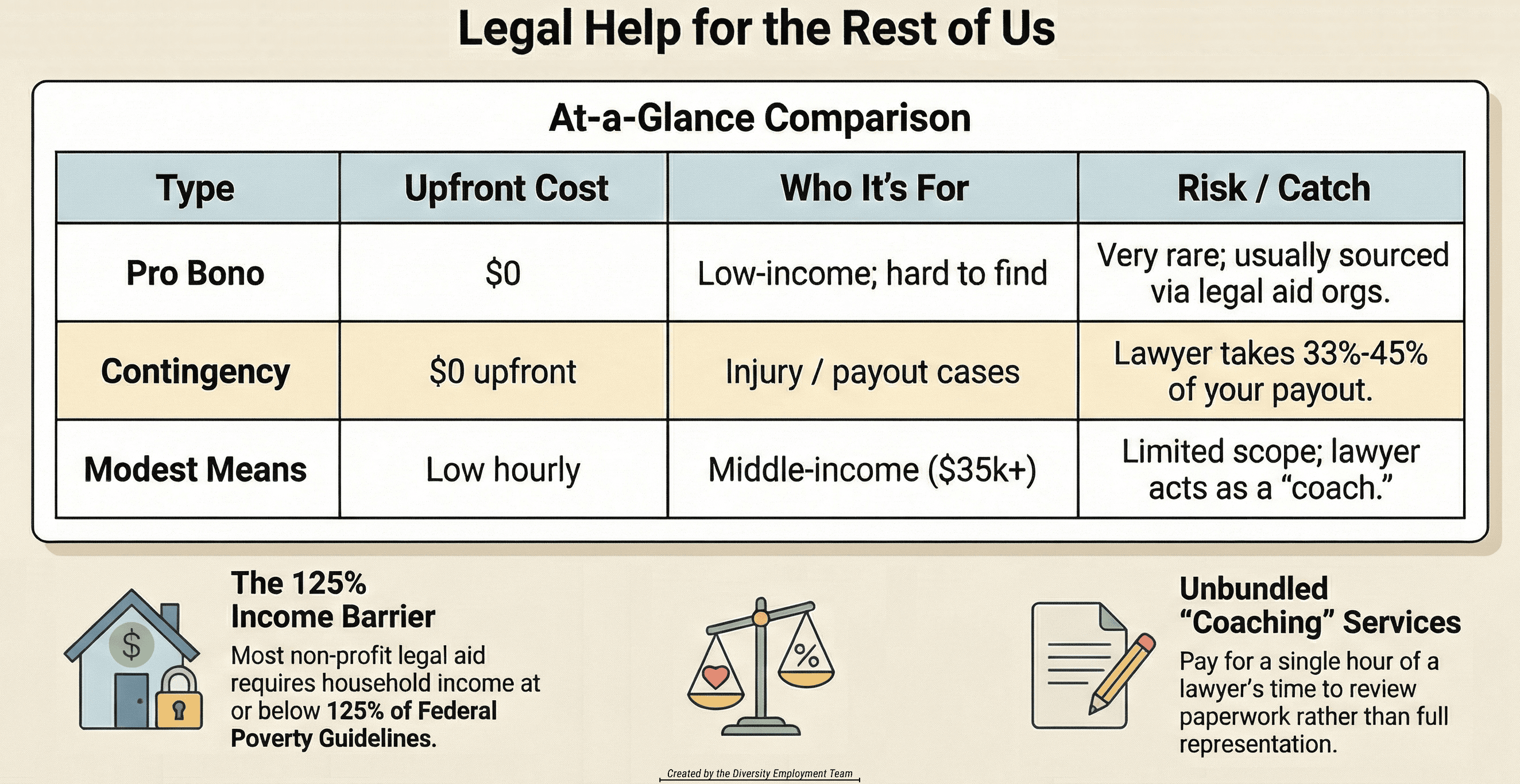
The catch is the Income Barrier. Most of these offices require your household income to be at or below 125% of the Federal Poverty Guidelines (for a single person in 2026, that’s roughly $19,950 a year). To find your local office, skip the random Google ads and go straight to LawHelp.org. It’s a clean, non-profit hub where you select your state and get a direct list of organizations that won’t charge you a dime. If you don’t qualify for free help, don’t hang up yet; many of these offices can still point you toward “self-help” clinics where a lawyer will review your paperwork for free.
The “Modest Means” Middle Ground
There is a massive group of people who make too much for free legal aid (say, $35,000 a year) but definitely can’t afford a lawyer charging $400/hour. If that’s you, look for a Modest Means program. These are partnerships between state bar associations and local lawyers who agree to charge significantly lower rates. Sometimes they can be as low as $75 for an initial hour-long consultation.
This is one of those Skill Architect moves: You pay for an hour of their time to tell you if you actually have a case and what specific forms you need to file. You don’t hiring them to represent you; you hiring them to be your coach for 60 minutes. Search for your “State Bar Association” and look for terms like “Lawyer Referral Service” or “Unbundled Services.”
Understanding the Bill: Pro Bono vs. Contingency
You’ll hear the term Pro Bono thrown around a lot. It literally means “for the public good,” which is just lawyer-speak for “free.” Many big firms do do pro bono work, but mostly to look good in their annual reports. Legal advice basics: it is notoriously hard to get a private lawyer to take a random case for free. Don’t waste weeks calling every office in town asking for a pro bono lawyer; they usually get their cases through one of the legal aid organizations mentioned above.
Contingency, on the other hand, is a much more common way to get a “free” lawyer, but only if your case involves a payout (like a car accident or massive wage theft). In a contingency deal, you pay $0 upfront, and the lawyer takes a cut (usually 33%-45%) of whatever you win. If your case loses, you don’t owe them their fee (but you might still have to pay for court costs like filing fees, so always ask about that). If a lawyer won’t take your case on contingency, it usually means they don’t think they can win you any money. It’s a brutal but effective reality check for your legal situation.
The New Workplace Rights Mandate
If you work in California there are some new “basics” to legal advice (or for a company that follows their lead), you should have received a standalone document either by email, text, or hand-delivered, sometime in the last ten days.
Workplace Know Your Rights Act (SB 294)
This is thanks to SB 294, the Workplace Know Your Rights Act. Unlike those dusty posters hanging in the corner of the breakroom, this notice is mandatory and personal. It’s designed to make sure you know exactly what you’re entitled to regarding Workers’ Comp (medical care if you’re hurt) and Immigration Protections (they can’t threaten your status to keep you quiet).
Most importantly, it highlights your Constitutional Rights at work. For the first time, your employer is required to remind you that you have 4th and 5th Amendment protections even while on the clock. If law enforcement shows up at your job, you have the right to be free from unreasonable searches and the right to remain silent. This legally obligates your boss to tell you that you don’t lose your basic American rights just because you clock-in.
The End of “Stay-or-Pay” Debt Traps (AB 692)
One of the dirtiest tricks in the corporate playbook is the training debt contract. You take a job, they give you three weeks of “specialized training,” and then they tell you that if you quit within a year, you owe them $5,000 for that training. As of January 1, 2026, this practice (AB 692) is pretty much dead in California and being challenged nationwide.
Under this new law, employers are prohibited from charging you a “quit fee” or making you pay back “onboarding costs.” There are very narrow exceptions for things like sign-on bonuses or university degrees, but even those have to follow strict rules:
- The agreement must be a separate document
- You get five business days to talk to a lawyer before signing
- The repayment must be “pro-rated” (meaning if you stay for half the time, you only owe half the money)
If your boss tries to hand you a bill for “lost profits” or “replacement fees” when you put in your notice, they are most likely breaking the law, and you can sue for at least $5,000 in damages.
The Arrest Protection Rule
This is a common sense skill that most people never think about until it’s too late. By March 30, 2026, every employer is required to give you the option to name a specific Emergency Contact for a very specific reason:
If you are arrested or detained while at work.
In the past, if a worker was detained by law enforcement or immigration during a shift, the company could literally just stay silent. The person’s family could have no idea where they were. Now, if the employer has any “actual knowledge” that you’ve been picked up, they must notify your designated contact. It’s a small administrative step, but for anyone without a deep support system, it’s the difference between disappearing into the system and having someone know exactly where you are so they can start Finding a Pilot from the steps we covered earlier. Keeping up with worker rights laws, in your state, that apply to you are some of the best legal advice basics people can give.
To Speak or Not to Speak?
There are three specific times when silence is your enemy.
First: Wage Theft. If your paycheck is missing hours, or if you’re being told to “clean up” after you’ve clocked out, that is a binary legal violation. There is no gray area.
Second: Safety Hazards (OSHA). If you are asked to operate a machine without proper training or work in conditions that violate the new 2026 heat-illness standards, you speak up immediately.
Third: Illegal Directives. If a manager tells you to lie on a government form or ignore an I-9 inspection (which, under SB 294, you now have a specific right to be notified about), you refuse.
In these cases, the law is your shield. Reporting these issues, in writing, triggers Whistleblower Protections. That means if they fire you for reporting that they aren’t paying you, that retaliation itself becomes a massive legal liability for them, usually worth much more than the original missing wages.
When to Law-Up: The Document First Zone
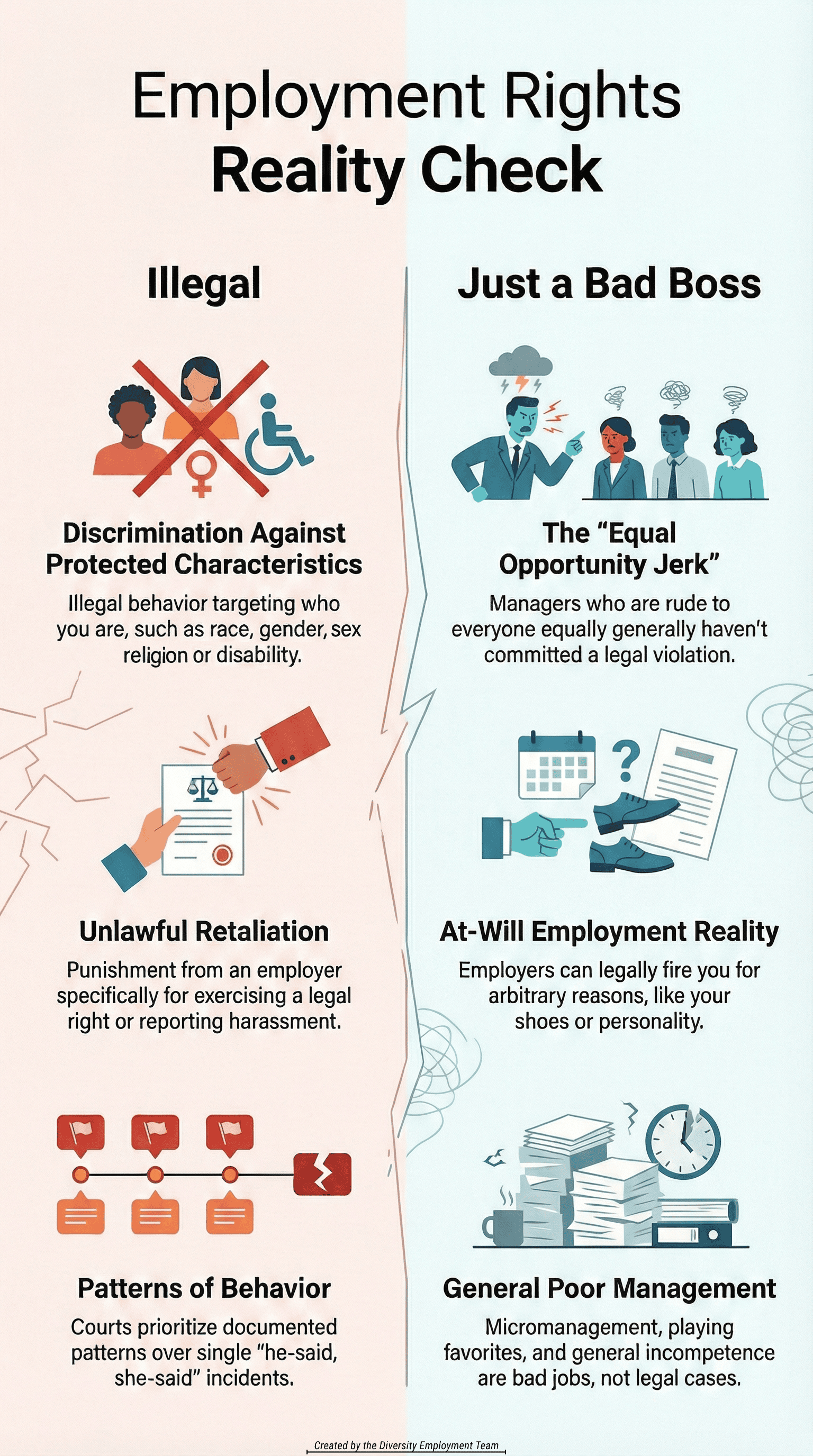
Harassment and discrimination are different beasts. That’s the most basics of legal advice. If a supervisor is making your life hell because of your race, gender, or a disability; don’t gripe about it in the breakroom. This is the time to go into documentation mode. Before you actually file a formal complaint, put together a detailed log with evidence. Use a private journal (never keep it on your work computer) to record the Date, Time, Location, and Exactly what was said or done.
Courts side with patterns of behavior over single “he-said, she-said” incidents. If you formally report harassment to HR, you are putting the company on notice. Once they are on notice, they have a legal obligation to fix it. If they don’t, or if they punish you for reporting it, your documentation becomes the evidence a lawyer needs to win your case.
The “Equal Opportunity Abuser”
One of the hardest legal advice basics to swallow is that… it is usually not illegal for your boss to be a jerk. If your manager is rude, plays favorites, micromanages you to death, or is generally incompetent, that’s just a bad job… Not a legal case. In most of the U.S., employment is At-Will, meaning they can fire you because they don’t like your shoes, and you can quit because you don’t like the coffee.
The law only steps in when that “jerkiness” targets:
1. A Protected Characteristic (who you are) or…
2. Is Retaliation for exercising a right (what you did).
If your boss is mean to everyone equally, they are an equal-opportunity-jerk, and the legal system generally doesn’t have a solution for that. In this scenario, your best move isn’t a lawyer; it’s an exit strategy.
Becoming a Legal Adept
Moving from a person who gets in trouble to a person who understands the system is a massive psychological shift. You really don’t need to be an expert in the law. You just need to know where the routes are, and how to read the map.
The “Folder Under the Bed” Checklist
To wrap up the basics of legal advice: if you’re coming from a background where you never had a “home base” for your life’s paperwork, start today. Get a physical folder or a secure digital drive and put these four things in it:
- Your Current Lease: Even if you’re month-to-month, get the original agreement.
- Durable Power of Attorney & Healthcare Directive: The silent voices that speak for you in an emergency.
- The “Know Your Rights” Notice: That document your boss handed you in February. Keep it as a reference for what they promised.
- A Pilot List: Write down the phone number for your local Legal Aid office before you actually need it.
The whole system overly complicates things, but it’s workable. Once you understand basic legal advice like: how contracts work, workplace rights, and legal aid options, you’ll stop feeling like a target; and start feeling like the professional you are!