We meet a dental hygienist every six months or so usually without ever thinking much about it. You get called back, you sit down, get a bib clipped on, then someone in scrubs leans over you with what looks like a tiny spaceship tool. Not long later your teeth feel like polished river stones. But a dental hygienist’s salary depends on a lot more than scraping plaque and reminding you (politely, of course) to floss more than once a presidential term.
It’s a surprisingly well-paid career, full of hands-on work, patient interaction, and a sense of routine that some people really enjoy. If you’ve ever wondered what the dental hygienist salary looks like, you’re curious about the day-to-day responsibilities, or you’re maybe entertaining a career shift into a healthcare job that doesn’t require med school (or debt the size of a mansion’s mortgage), everything is laid out: cleanly, thoroughly, and with enough detail to give you a real picture.
Let’s break down the training, the work environment, the good stuff, the not-so-good stuff, what life actually looks like once you got the job, and most importantly the pay.
Why Dental Hygienists Are in High Demand
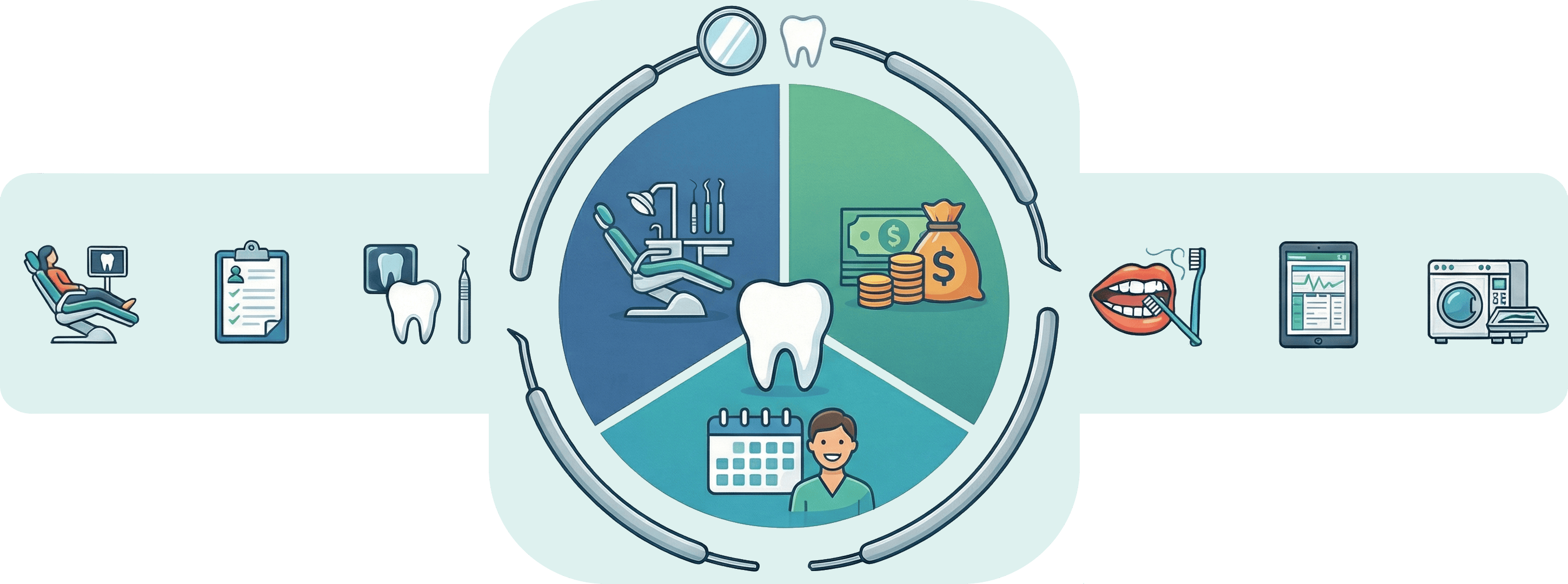
There’s a pretty simple reason dental hygienist careers keep growing: People need their teeth. And more importantly, they need someone who knows how to keep those teeth from falling apart. Add in the aging population, more demand for preventative care, and the fact that dentists increasingly rely on hygienists to keep the office moving smoothly, and you’ve got a career that isn’t going anywhere for a while.
The field has been expanding for years because the job is expanding.
- Preventive dental care is now considered essential… not optional: Skip cleanings long enough and the “small stuff” tends to stop being small. A little inflammation turns into gum problems. Tiny decay turns into bigger work. And suddenly the visit costs way more than it would’ve six months ago.
- Dentists are delegating more clinical duties to dental hygienists: In a lot of offices, hygienists handle the X-rays, the periodontal charting, and the deep cleanings. And depending on the state (and the hygienist’s credentials), they might also be the ones to give local anesthesia or nitrous oxide. That frees the dentist up for exams and procedures that only they can do.
- Hygienists help offices treat more patients per day: A steady hygiene schedule keeps the whole operation from clogging up. It also helps “catch” treatment needs early, so the dentist isn’t walking into surprises later.
Where That Need Comes From
- Many long-time hygienists are retiring (or cutting back): It’s a physical job. Even before someone fully leaves the field, plenty of hygienists dial their hours down, go temp, or only work a couple days a week. That still shrinks supply, and it makes scheduling harder for offices trying to stay fully staffed.
- Some states have expanded dental hygienist responsibilities; increasing the skill requirement, and the pay: When the role expands, hiring gets tougher. More training, more certifications, more responsibility… and the people who can do it well are (obviously) more valuable.
- Employment is still projected to grow: The BLS projects dental hygienist jobs will grow 7% from 2024-2034, which is a bit faster than average.
And one more thing: This is a career where burnout is lower than many other clinical roles. You’re not on trauma floors or managing life-or-death situations every hour. It’s still real healthcare work, but not “high-stakes” in the ER sense.
Dental Hygienist Salary
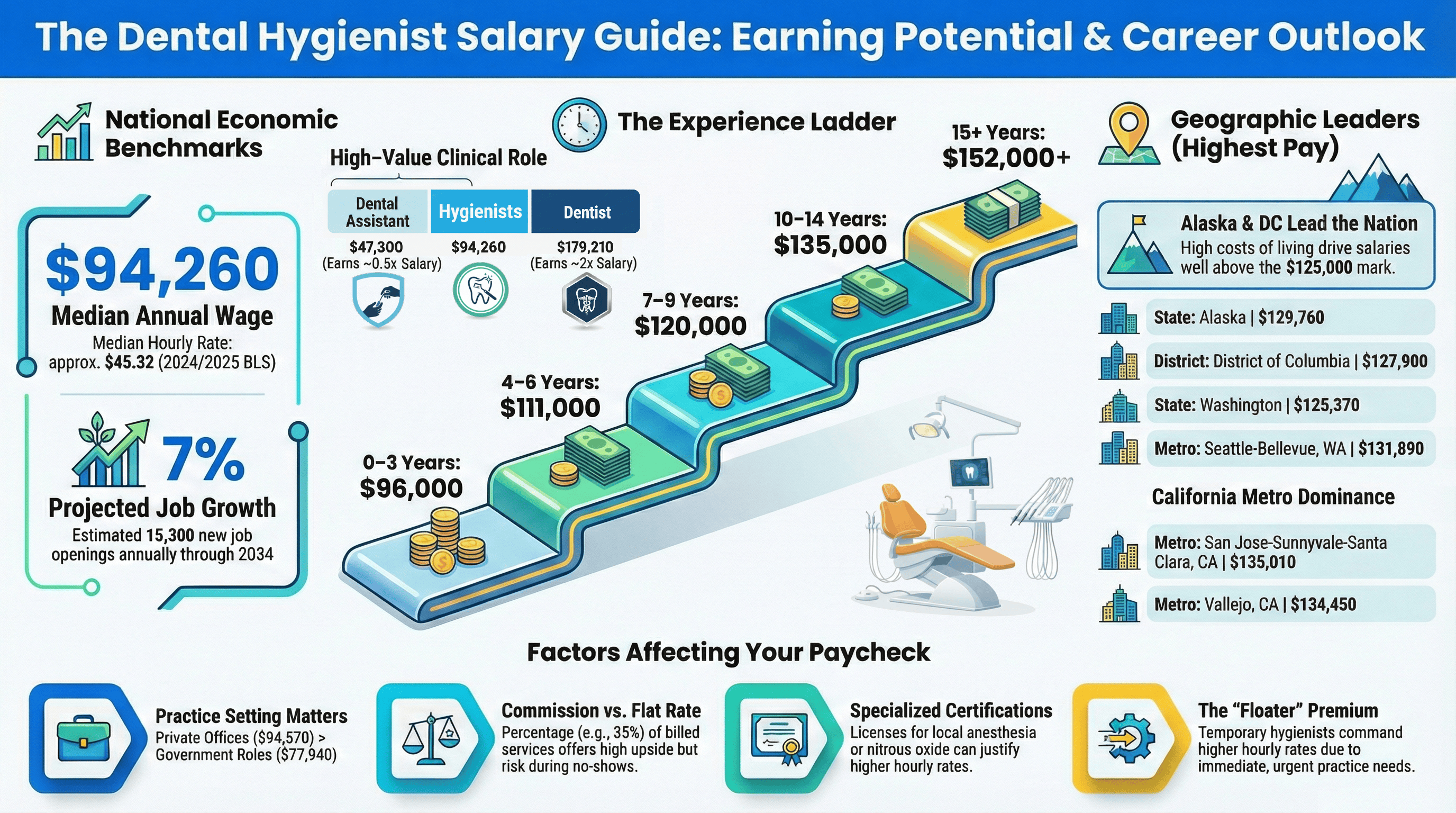
Here’s the part you came for: the Dental Hygienists Salary; it’s one of the highest in healthcare that doesn’t require a bachelor’s degree.
Created by the Diversity Employment Team
National Averages
- Hourly: Wages hover anywhere between $36-$51 an hour
- Annually: Salaries can start anywhere near $72,000 and with location and experience, can go well above $100,000+
- Top Earners: The highest paid dental hygienists (generally in high-demand cities/areas) easily earn $150k+
The Salary Varies a Lot By:
- State (California, Washington, Connecticut, and Oregon pay the highest)
- Urban vs. Rural areas
- Full-time vs. Part-time
- Years of Experience
- Specialty Practices (Periodontics usually pays a bit higher)
- Whether the office offers bonuses or commission-based pay
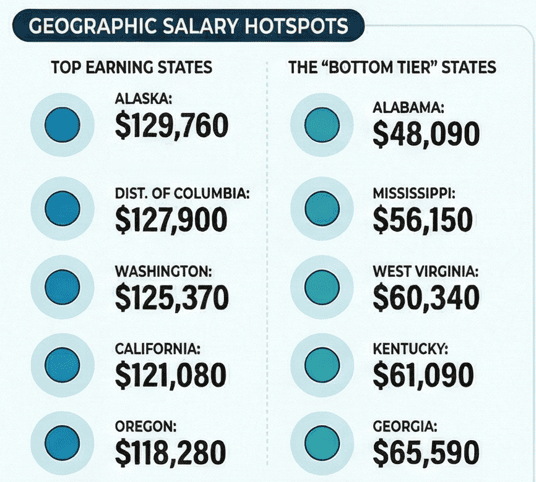
Why Hygienists Often Earn More Than Expected
There’s a weird supply/demand imbalance. Many regions simply don’t have enough accredited hygiene programs to produce all the hygienists needed. That alone drives wages up. And since hygienists can directly increase a dental practice’s revenue by treating more patients, offices are willing to pay well.
Some hygienists work two or three part-time offices instead of one full-time job because the pay is so strong and their flexibility is unmatched.
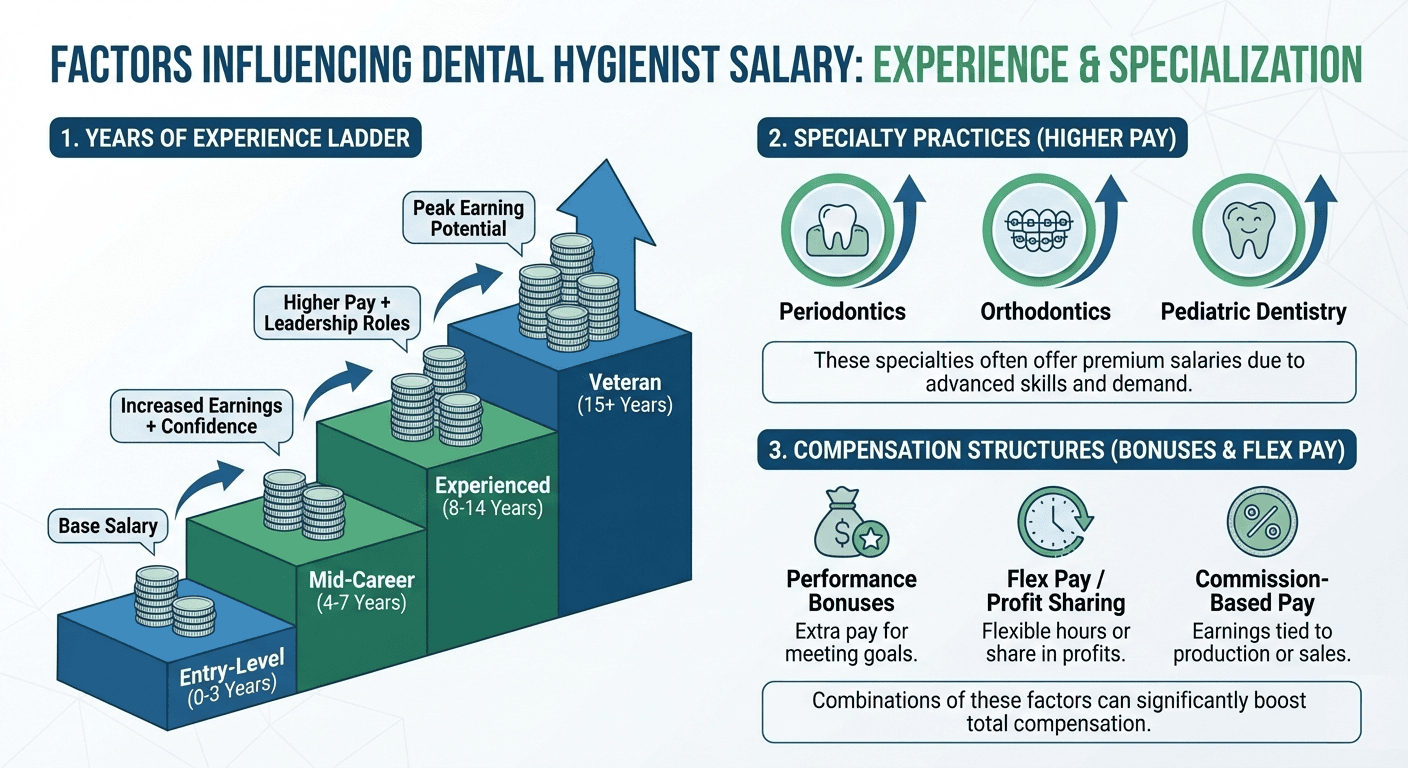
Created by the Diversity Employment Team
What Dental Hygienists Do All Day (The Reality, Not the Job Brochure)
From the patient’s perspective, the job looks pretty straightforward: recline the chair, clean the teeth, polish, done. Yet, from their eyes, the day’s a constant rotation of clinical work, patient management, documentation, instrument handling, sterilization, and a surprising amount of talking and listening. Because, no two appointments will ever be exactly the same, even if their schedules look identical on paper.
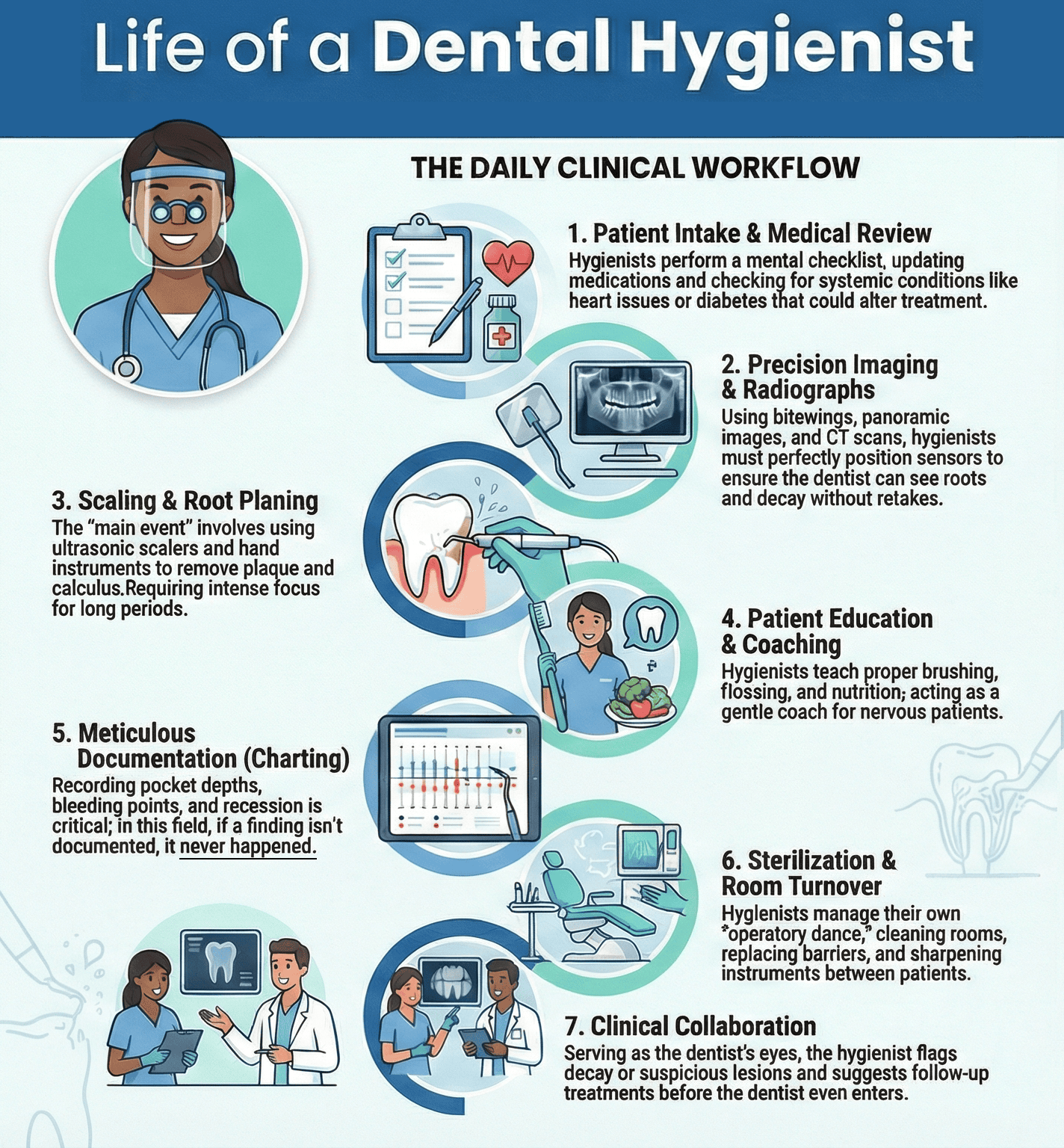
Created by the Diversity Employment Team
1. Patient Intake and Review
Before you recline in that chair or anything touches your teeth, hygienists are already working through a mental checklist. They’re reviewing what’s changed since the last visit and what could affect today’s treatment.
That usually includes:
- Review patient’s medical history
- Update medications
- Check for systemic conditions like heart issues, diabetes, or pregnancy
- Take blood pressure (in many practices)
- Ask about pain, sensitivity, anxiety, or recent dental changes
Teeth don’t live alone; the rest of the body matters too. A certain change in overall health can completely change how a cleaning is done, or whether it even happens at all.
2. X-Rays and Imaging
In most offices, a dental hygienist handles all radiographs. That can include:
- Bitewings
- Periapicals
- Panoramic images
- Cone beam CTs (in some practices)
This part of the job looks quick, but it’s technical. Every dentist has preferences, every patient has a different anatomy, and nothing slows a schedule down faster than retakes. Hygienists get very good at positioning sensors just right so the image actually shows what the dentist needs, roots included.
3. Scaling and Root Planing (The Main Event!)
This is the part you’ll probably recognize.
Most of the appointment revolves around removing plaque and calculus using a mix of tools, like:
- Ultrasonic scalers
- Hand instruments
- Probes
- Polishers
- Sprayers and suction
When periodontal disease is involved, the work goes deeper. Scaling and root planing is more than “a deeper cleaning.” It requires careful technique, patient coaching, and pacing… Especially when someone is uncomfortable or nervous. It’s super technical work that demands uncompromised focus for long periods at a time.
4. Patient Education
A big part of dental hygiene happens after the tools are put down.
Hygienists spend a lot of time explaining things like:
- How to brush properly (Yep, adults really do still need this part)
- How to floss (Most people don’t actually know how)
- Nutrition and its impact on oral health
- Managing dry mouth
- Smoking and/or vaping risks
- Preventive care schedules
They become part clinician, part coach, part gentle voice saying “Hey, this isn’t as scary as you think,” or “No, you’re not the worst flosser I’ve ever seen.”
5. Charting
Dental hygienists do a ton of paperwork. Charting is significant, and it matters a lot.
Generally includes recording:
- Pocket depths
- Bleeding points
- Recession measurements
- Mobility grades
- Plaque and calculus distribution
- Radiographic notes
- Medical changes or updates
- Treatment notes
This is more than regular ‘busywork’. Charting actually protects the patient, the hygienist, and the practice. It has to be meticulous, if something isn’t documented, it’s treated like it never happened.
6. Sterilization and Room Turnover
Hygienists don’t just work with patients and then disappear.
They’re also responsible for:
- Cleaning and resetting operatory rooms
- Replace barriers
- Sharpening instruments
- Packaging and sterilizing tools
- Refilling waterlines
- Prepping trays for the next appointment
If a schedule is packed really tightly, room turnover becomes a very efficient routine. But, if they miss a step, the whole day can fall behind.
7. Working With the Dentist
They’re the dentist’s eyes before the dentist looks in the patient’s mouth. Before the dentist ever sits down, the hygienist has already formed a pretty full clinical picture.
Hygienists will:
- Point out suspicious areas
- Flag gum recession
- Identify possible decay
- Update the dentist on patient concerns
- Suggest areas that may need follow-up or treatment
Many dentists rely heavily on their hygienists’ assessments. Hygienists are setting the stage for the dental exam and helping guide the next steps.
What Life Actually Looks Like
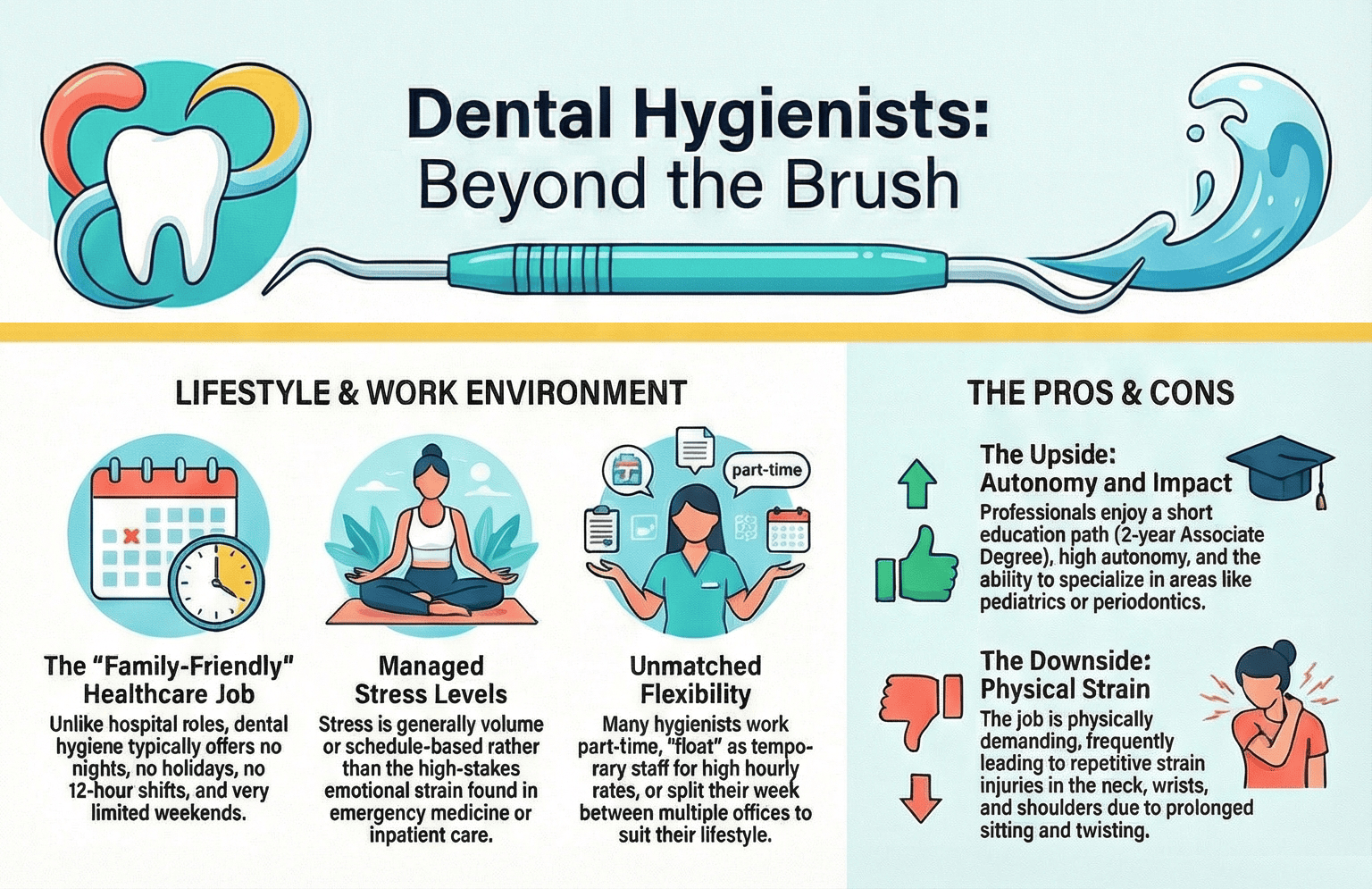
Created by the Diversity Employment Team
Dental hygiene jobs aren’t one-size-fits-all. Depending on the office (and your preferences), you might work:
- Full-time
- Part-time
- Split between multiple offices
- Temporary / Fill-in (“floater” hygienists who cover shifts at other practices)
Typical Hours
Most dental offices run on a pretty consistent weekly schedule:
- Monday-Thursday is the most common
- Occasional Fridays
- Some Saturdays (This is more location- and practice-dependent)
Evening shifts do exist, but they aren’t the norm everywhere.
This is one of the few healthcare jobs with no nights, no holidays, no 12-hour shifts, and very limited weekends (if any, at all). For a lot of people (especially parents), the schedule predictability is a huge reason the job is so attractive.
Pace and Stress Level
The stress is still real, but it’s just a different kind than hospital work. It tends to be:
- Schedule-based (running on the clock all day)
- Patient-based (comfort, anxiety, personalities)
- Volume-based (how packed the day is)
- Occasionally dentist-based (Yes, sometimes it’s that one dentist who’s a little… intense)
But it’s definitely not the same emotional strain as emergency medicine or even inpatient care.
How to Start Earning a Dental Hygienist Salary
The path is pretty straightforward, but it’s also tightly controlled by state rules. It’s more than “just” finishing a program and jumping into a clinic. There are a few checkpoints that basically every hygienist has to clear.
1. Education
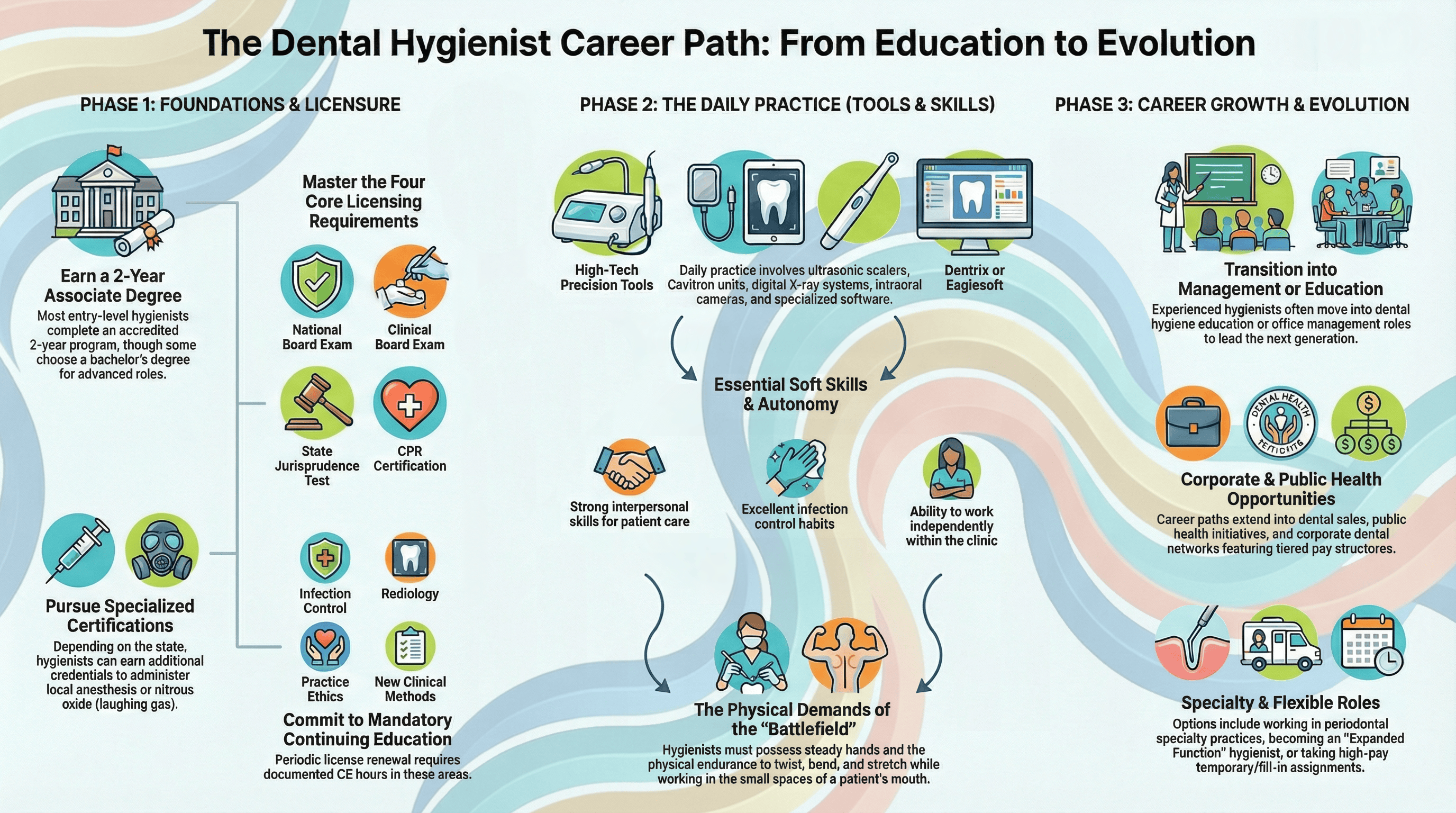
Most dental hygienists start with a two-year Associate Degree from an accredited dental hygiene program… The standard entry point.
Some people go on for a Bachelor’s Degree later (especially if they want to eventually teach, move into public health, or step into leadership), but typically don’t need it to get hired and start practicing.
2. Licensing
Every state requires licensing, and that usually means a combo of exams and basic safety credentials, such as:
- National Board Exam
- Clinical Board Exam
- State Jurisprudence Test (Basically: “Do you know the rules in this state?”)
- CPR Certification
Depending on the state, hygienists might also be able to earn additional certifications to expand what they’re allowed to do. Such as local anesthesia or nitrous oxide. That can make them more valuable to certain practices and most of the time bumps up their pay, too.
3. Continuing Education
Once you’re licensed, you don’t just ‘set it and forget it.’ Most states require periodic license renewal; and that includes completing a certain number of continuing education (CE) hours.
CE topics usually cover things like:
- Infection Control
- Radiology
- CPR
- Practice Ethics
- New Tools & Clinical Methods
It’s one of those careers where you’re always staying current, even if you’ve been doing the job for a decade.
Created by the Diversity Employment Team
Tools, Technology, and Skills Hygienists Use Daily
Dental hygiene is a very technical job, even if the tools look small enough to lose in a couch cushion. You’re working in millimeters, in tight spaces, and on a schedule that doesn’t wait for “almost.”
Tools and Tech You’ll See All the Time
Dental hygienists work with a mix of hand tools and modern equipment, including:
- Ultrasonic scalers (The buzzing tools people remember)
- Cavitron units (That high pitched scream coming from your mouth, that’s NOT you)
- Hand instruments like curettes and scalers (Especially essential for detail work)
- Prophy angles (Polishing)
- Air polishers (Only in some practices)
- Digital X-ray systems
- Intraoral cameras (Helpful for patient education and documentation)
- Dental software such as Dentrix, Eaglesoft, or Open Dental (charting, notes, scheduling, imaging, everything.
Some offices are very modern and paperless. Others still feel a little more old-school. Either way, the job still requires the same high level of precision and consistency.
Skills That Matter More Than Expected
The best dental hygienists have a combo of technical ability and good people skills. Because the work is methodical and hands-on; but the patients they work on are real people, with real feelings (some much stronger than others).
- Steady hands and attention to detail (Working around gums, nerves, and sensitive areas)
- Strong interpersonal skills (They calm anxious patients every day, even if some don’t say they’re anxious)
- Ability to work independently (They end up running their room and own schedule for most of the day)
- Comfort working in very small spaces (Mouths are tiny little battlefields… and some patients have a much stronger gag reflex than others)
- Excellent infection control habits (Straight-up non-negotiable)
- Physical endurance (They might technically be “sitting,” but they’re also twisting, reaching, leaning, and holding awkward positions, for hours)
It’s a job where you get better with time. Yes, hygienists hone their technique; but also how to work faster, smoother, and with less strain on their body.
Life With a Dental Hygienist Salary
This is where the job usually clicks for people, or doesn’t.
Sure, the pay gets most of the attention, but the daily life is what actually determines whether someone stays in the field long term.
The Pros
- Excellent pay for the length of schooling required
- Short education path compared to many healthcare roles
- Predictable schedules that make planning life easier
- Meaningful patient impact (It’s preventing problems, not just reacting to them)
- A high level of autonomy once you’re comfortable in the role
- Strong demand almost everywhere, which makes job hunting easier
- Part-time flexibility without a major pay penalty
- Opportunities to specialize, including periodontal, pediatric, or geriatric-focused practice
The Cons
- Repetitive strain injuries are common, especially in the neck, wrists, and shoulders
- Tight schedules can make the day feel rushed
- Some patients are anxious, difficult, or downright terrified, and that emotional labor adds up
- Office dynamics can be tricky in small teams working in close quarters
- Insurance limitations sometimes restrict what care can realistically be provided
For a lot of dental hygienists, the positives outweigh the downsides, but it’s not a total “no-tradeoffs” career. The people who last tend to be the ones who go in with clear expectations and take care of their bodies early on.
Career Growth Opportunities
Dental hygiene definitely isn’t a dead-end job, unless you choose to keep it that way. Many hygienists do stay in the chair for years (and are totally happy with it), but there are also plenty of ways to grow income, schedule flexibility, or even long-term options.
Common paths include:
- Dental hygiene education (Teaching in hygiene programs or training new hygienists)
- Office management (Especially for people who like operations, scheduling, and team leadership)
- Dental sales (Equipment, supplies, software… Higher earning potential for the right personality)
- Public health (Community clinics, school programs, outreach, preventive initiatives)
- Expanded function hygienist roles in states that allow a broader scope of practice
- Temporary / Fill-in (“temp”) hygienist work; higher hourly rates, flexible scheduling, and variety
- Periodontal specialty practices where the work can lean more advanced and pay may bump up
- Corporate dental networks that offer tiered pay, bonuses, or clearer promotion tracks
Some hygienists eventually move on to dentistry, but plenty never feel the need. For many, the dental hygienist path hits their sweet spot: strong pay, steady demand, and a schedule that doesn’t eat up your whole life.
Is This the Right Career for You?
Created by the Diversity Employment Team
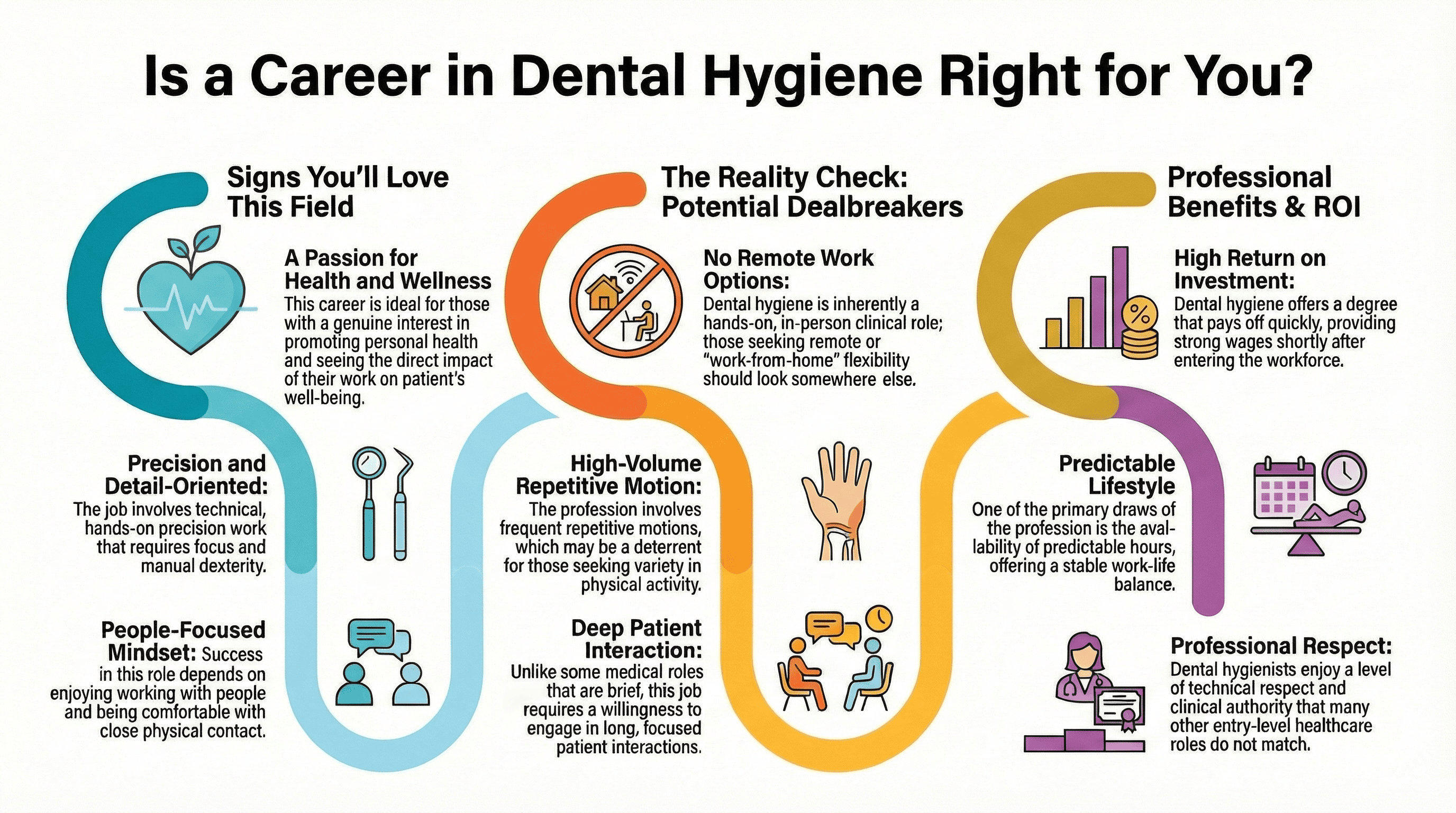
You’ll probably love this field if:
- You enjoy working with people
- You don’t mind close contact
- Precision work appeals to you
- Health and wellness interest you
- You want a degree that pays off quickly
- You like predictable hours
On the flip side, if you’re dead-set on fully remote work, really dislike repetitive motion, or don’t enjoy long one-on-one interactions, this probably isn’t your lane… And that’s okay! Knowing that upfront saves a lot of frustration later. If you do love the “behind-the-scenes” clinical work more than the patient-facing stuff a career as a sterile processing technician might suit you better.
So, Should You Pursue Dental Hygiene?
The dental hygienist salary is what pulls most people into the field. The work itself is what actually makes them stay.
It’s technical without being too overwhelming, patient-focused without being overly chaotic, and structured without feeling fully boxed in. They get real responsibility, professional respect, and a schedule that doesn’t completely take over their personal life… Which is rare for a healthcare job to offer.
If you’re looking for a career with solid pay, steady demand, diverse staffing jobs, and a clear path from school to employment, dental hygiene might fit better than you expect.